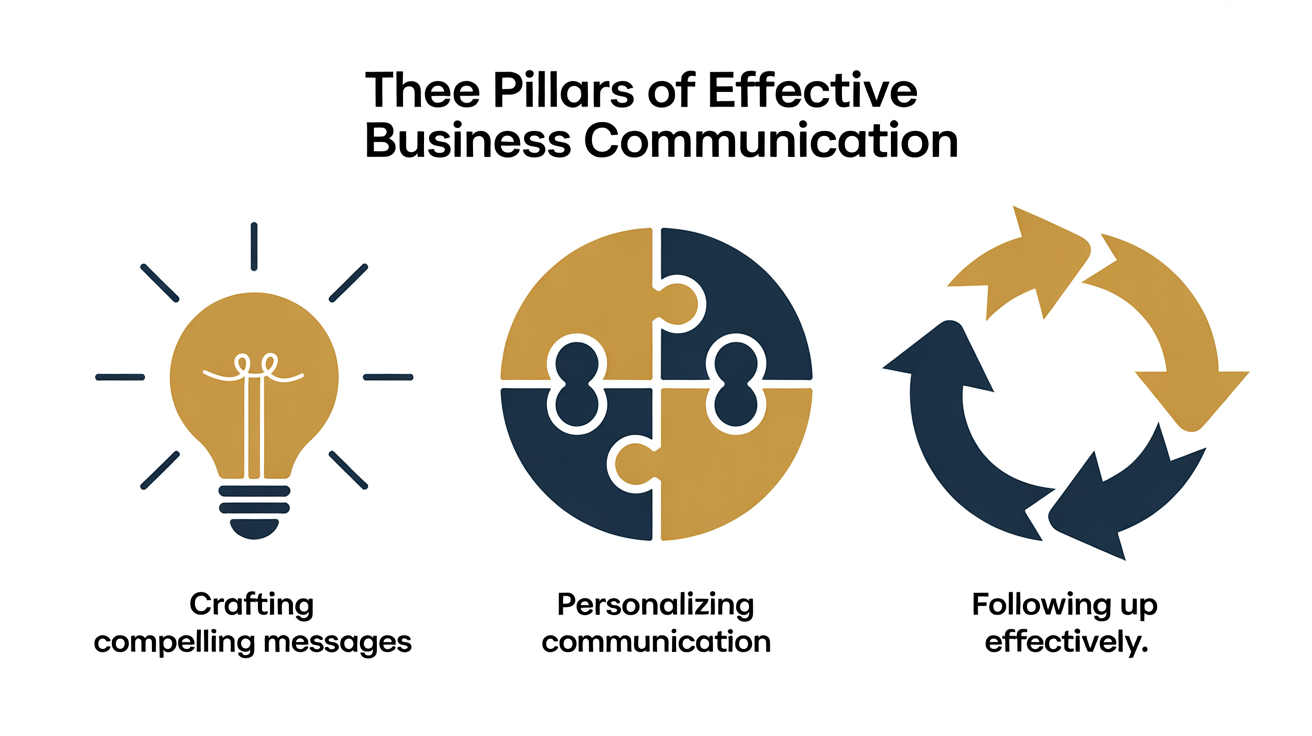
Crafting Compelling Messages, Personalizing Communication, and Following Up Effectively
Lesson Overview
Email outreach remains one of the most widely used—and most misused—sales and business development tools.
When email outreach fails, it is rarely because email “doesn’t work.”
It fails because messages are:





Too generic
Too long
Too self-focused
Sent without a clear purpose
Effective email outreach is not about volume.
It is about relevance, clarity, and timing.
This lesson explores how to:
Structure email outreach for clarity and engagement
Craft messages that are read, not ignored
Personalize emails without sounding artificial
Follow up in a way that adds value rather than pressure
The Purpose of Email Outreach
Before writing a single line, it’s important to understand what email outreach is meant to achieve.
Email outreach is designed to:
Introduce a conversation
Create awareness of relevance
Prompt a simple next step
It is not designed to:
Fully explain your offering
Close a complex sale
Convince an uninterested reader
Strong email outreach opens doors—it does not force them open.
How People Actually Read Emails
Most recipients:
Scan, rather than read word-for-word
Decide within seconds whether to continue
Read on mobile devices
Mentally ask, “Is this worth my time?”
Effective outreach emails respect this reality.
The Anatomy of an Effective Outreach Email
A strong outreach email follows a clear structure.
1. Subject Line: Earn the Open
The subject line’s only job is to get the email opened.
Effective subject lines:
Are short and specific
Avoid hype or sales language
Create curiosity or relevance
Examples:
“Quick question about your process”
“Reducing delays in [specific area]”
“A thought on [relevant challenge]”
The subject line should feel professional and human, not promotional.
2. Opening Line: Establish Relevance
The first line determines whether the email is read or ignored.
Strong openings:
Acknowledge context
Reference something specific
Avoid generic introductions
Weak opening:
“I hope this email finds you well.”
Stronger opening:
“I’ve been speaking with teams who are struggling to keep follow-ups consistent without adding extra admin work.”
3. The Value Statement
The value statement answers:
“Why should I care?”
It should:
Reference a common challenge or goal
Stay focused on outcomes
Avoid product features
Example:
“Many teams tell us they’re losing momentum after initial conversations because follow-ups fall through the cracks.”
4. The Call to Action (CTA)
Effective CTAs are:
Simple
Low-commitment
Clear
Examples:
“Would you be open to a brief conversation?”
“Is this something you’re exploring right now?”
“Would it make sense to connect for 10 minutes?”
Avoid:
Multiple CTAs
Aggressive language
Large time commitments
Crafting Compelling Email Templates
Templates provide consistency—but relevance drives results.
What Makes a Template Effective
Flexible language
Clear structure
Easy personalization points
Templates should act as frameworks, not scripts.
Personalization That Feels Authentic
Personalization is not inserting a name or company logo.
Real personalization shows:
Awareness of context
Understanding of challenges
Respect for the recipient’s role
Meaningful Personalization Examples
Referencing industry trends
Mentioning role-specific responsibilities
Acknowledging common pressures
Example:
“Many operations leaders I speak with are balancing efficiency goals with limited staffing.”
This feels relevant without being intrusive.
Avoiding Over-Personalization
Too much personalization can feel:
Inauthentic
Creepy
Forced
Avoid:
Over-researching personal details
Referencing social media activity unnecessarily
Using flattery as a hook
Professional relevance always beats personal familiarity.
Writing for Clarity and Brevity
Effective outreach emails are typically:
75–150 words
Written in short paragraphs
Easy to skim
Guidelines:
One idea per paragraph
Plain, conversational language
No jargon or buzzwords
If an email requires scrolling, it’s usually too long.
Following Up Without Being Pushy
Most responses come from follow-ups—not first emails.
Why Follow-Ups Matter
Emails are missed or forgotten
Timing may not be right initially
Relevance may increase later
Following up is not harassment—it’s professional persistence.
Effective Follow-Up Strategy
Strong follow-ups:
Reference the original message
Add light value or context
Maintain a respectful tone
Example:
“Just following up in case this got buried—happy to reconnect if this is relevant, or step back if now isn’t the right time.”
This keeps the door open without pressure.
How Many Follow-Ups Are Appropriate?
A common guideline:
Initial email
2–3 follow-ups over several weeks
Spacing matters.
Daily follow-ups create resistance. Thoughtful spacing builds professionalism.
Knowing When to Stop
Not every outreach will convert.
Professional outreach includes:
Recognizing disengagement
Respecting silence
Leaving a positive final impression
Example:
“I haven’t heard back, so I’ll step back for now. If this becomes relevant later, I’m happy to reconnect.”
This preserves goodwill and credibility.
Common Email Outreach Mistakes
Writing emails that are too long
Making the message about yourself
Using generic, mass-send language
Overloading with links or attachments
Failing to follow up—or following up too aggressively
Key Takeaways
Email outreach is about relevance, not volume
Clear structure improves readability and response
Personalization should feel thoughtful, not forced
Follow-ups are essential when done respectfully
Strong outreach emails invite conversation, not commitment