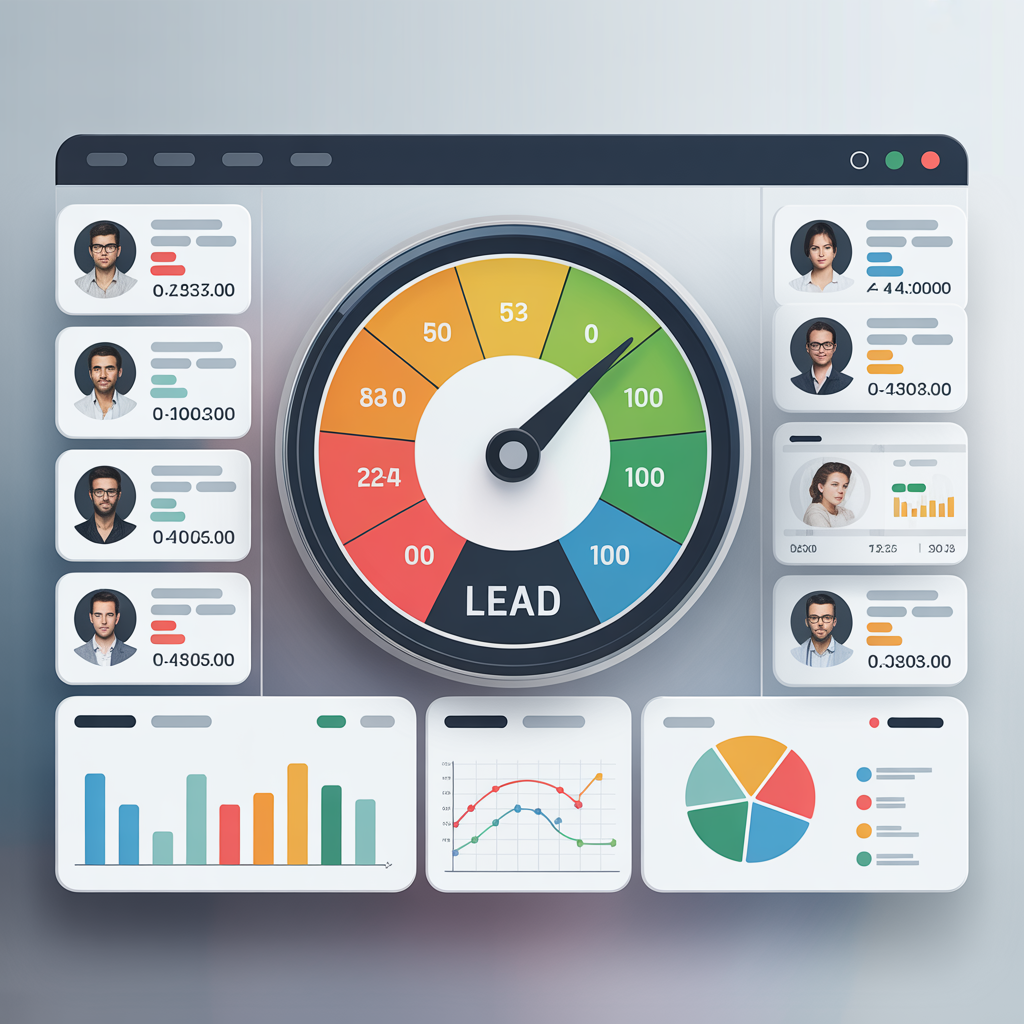
Prioritizing Leads Based on Potential Value and Readiness to Buy
Lesson Overview
One of the most common problems in sales organizations is not a lack of leads—but a lack of focus.
When all leads are treated the same:
High-potential opportunities receive insufficient attention
Sales effort is diluted
Follow-up becomes inconsistent
Conversion rates suffer
Lead scoring exists to solve this problem.





From a sales management perspective, lead scoring is not about labeling prospects—it is about allocating time, attention, and resources intelligently.
This lesson explores how lead scoring helps organizations:
Prioritize leads based on likelihood and value
Improve sales efficiency and consistency
Align sales and marketing efforts
Reduce wasted effort and frustration
When implemented properly, lead scoring improves outcomes without increasing workload.
What Is Lead Scoring?
Lead scoring is the process of assigning values to leads based on specific criteria that indicate:
Fit (how well the lead matches the ideal customer profile)
Interest (how engaged the lead is)
Readiness (how close they may be to a buying decision)
Scores help answer a critical management question:
“Which leads deserve attention right now?”
Why Lead Scoring Matters at Scale
In small teams, intuition can sometimes work.
As volume increases, intuition breaks down.
Without lead scoring:
Sellers chase the loudest or newest lead
Follow-up becomes reactive
High-value opportunities are missed
Lead scoring introduces objectivity and discipline into prioritization.
Fit vs. Interest: A Critical Distinction
Top sales leaders separate fit from interest.
Fit-Based Criteria
Role or title
Company size or type
Industry alignment
Budget authority
These indicate whether a lead should buy.
Interest-Based Criteria
Content engagement
Email responses
Website activity
Event participation
These indicate whether a lead wants to buy—or is moving closer.
Strong lead scoring models consider both dimensions.
Lead Scoring as a Resource Allocation Tool
From a management lens, lead scoring helps answer:
Which leads require immediate follow-up?
Which should enter nurture workflows?
Which should not be pursued further?
This ensures:
Senior sellers focus on high-value opportunities
Junior or automated processes handle lower-priority leads
Time is spent where it has the greatest return
Behavioral Signals That Matter
Not all activity is equal.
High-value signals often include:
Repeated engagement over time
Requests for deeper information
Interaction with decision-stage content
Direct communication
Low-value signals may include:
One-time downloads
Passive browsing
Generic form submissions
Sales leaders should coach teams to recognize signal quality, not just volume.
Aligning Lead Scoring with the Sales Process
Lead scoring should support—not complicate—the sales workflow.
Effective alignment means:
Clear thresholds for action
Defined expectations for follow-up
Consistent interpretation across the team
A lead score should trigger decisions, not confusion.
The Role of CRM in Lead Scoring
CRM systems are essential for scalable lead scoring.
They:
Capture behavioral and profile data
Apply scoring logic consistently
Provide visibility across teams
From a leadership perspective:
Lead scoring without CRM integration rarely scales.
Avoiding Over-Engineering
One of the most common management mistakes is complexity.
Overly complex scoring models:
Reduce adoption
Create distrust in the system
Lead to inconsistent usage
High-performing teams:
Start simple
Test assumptions
Refine over time
The goal is useful direction, not mathematical perfection.
Lead Scoring and Sales–Marketing Alignment
Lead scoring is a shared responsibility.
Sales leaders should ensure:
Agreement on what constitutes a “qualified” lead
Feedback loops between sales and marketing
Regular review of scoring effectiveness
Misalignment here leads to friction and wasted effort.
Coaching Teams to Use Lead Scores Properly
Lead scores do not replace judgment—but they guide it.
Managers should coach sellers to:
Use scores as prioritization tools
Combine data with conversation insight
Avoid ignoring high scores or chasing low ones
Consistency improves when expectations are clear.
Common Lead Scoring Failures
Treating all engagement equally
Failing to revisit scoring criteria
Ignoring sales feedback
Using scores without clear next-step rules
Lead scoring fails when it becomes administrative, not strategic.
Lead Scoring as a Performance Lever
When applied well, lead scoring:
Improves conversion rates
Shortens sales cycles
Reduces seller burnout
Increases predictability
It is one of the most effective ways to improve results without increasing headcount.
Key Takeaways (Sales Management Lens)
Lead scoring prioritizes effort, not just leads
Fit and interest must both be considered
Scoring improves consistency and focus at scale
Simplicity drives adoption and effectiveness
Leaders create value by enforcing clarity and usage